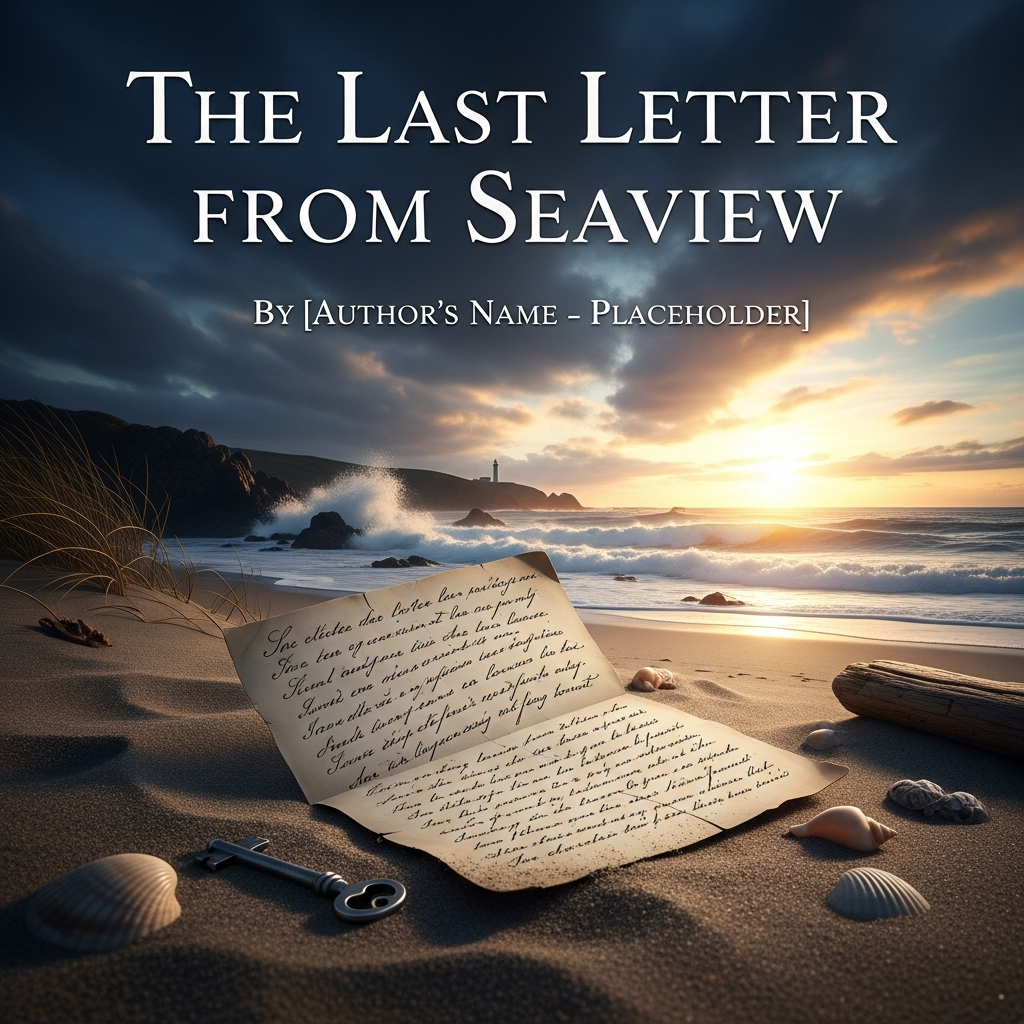
Clara Finch’s ‘The Last Letter from Seaview’ emerges as a poignant testament to the enduring power of memory and love, set against the backdrop of wartime tumult. This evocative historical fiction cleverly weaves emotions into the epistolary format, capturing a zeitgeist that both challenges and comforts its readers and asserts its place in the rich tapestry of today’s literary offerings.

Literary Context & Ecosystem
Set against the shifting tides of contemporary global publishing, ‘The Last Letter from Seaview’ by Clara Finch deftly engages with today’s reader in an era defined by fragmentation and digitalization. In a world that now favors quick, digital consumption over the slower, contemplative intake of complex narratives, Finch’s work harkens back to an age where letters were the medium of vulnerability and profundity. As the rise of ‘Healing Fiction’ reflects readers’ craving for reconciliation of personal histories with greater cultural narratives, this book offers a refuge amidst the ever-accelerating pace promoted by platforms like BookTok and BookTube. Despite the competitive arena dominated by direct-to-consumer digital giants such as Amazon, Amazon Books sales data suggests the popularity of emotionally resonant narratives has only increased, with a quarterly surge noted amongst historical fiction bestsellers.
Deep Dive: Substance & Craft
Finch’s narrative unfolds with a lyrical prowess that expertly balances pacing with emotional gravitas, engaging readers through a dual perspective format. It captures both the immediacy of the wartime experience and the introspective aftermath. Using letters as both plot device and narrative mechanism, Finch masterfully conveys character development and thematic depth. She explores the psychology of longing and the universality of human connection, reflected in the author’s unique voice—delicate yet deeply resonant. Finch’s fusion of originality with homage to traditional epistolary techniques aligns her with both her predecessors and those who look to innovate within the historical genre, standing as a connective beacon between new storytelling forms and timeless expressions of human experience.
Common Misconceptions & Critical Fallacies

In an era plagued by superficial reading habits, often influenced by the culture of skimming prevalent in digital settings, the nuanced meanings within Finch’s work may be undervalued or overlooked. Critics often dismiss epistolary narratives as indulgently romanticized without recognizing their profound ability to expose the internal truths of its characters. Clara Finch intends to engage a dialogue between memory and reality, which can be misconstrued by those unfamiliar with deeper narrative symbolism. Thus, the reductionist view that limits the understanding of Finch’s work only to its love story dimension astonishingly fails to appreciate the complex interplay of history, memory, and identity she expertly crafts.
Expert Case Studies & Real-World Impact

Despite varied public reception and scrutiny from academia, ‘The Last Letter from Seaview’ has left an indelible mark on the landscape of historical fiction. By reigniting interest in the correspondence form, Finch influences new generations of authors who, inspired by her storytelling, aim to blend emotional depth with historical relevance. While its status as a bestseller attests to its widespread appeal, its potential as a modern classic is underway, striking a balance between commercial success and significant cultural reflection. This delicate equilibrium challenges readers to reflect on the repercussions of war and the enduring essence of love when influenced by time and distance.
2026 Industry Update

As we saunter into 2026, ‘The Last Letter from Seaview’ finds itself amidst transformative shifts in reading and literary criticism landscapes. The ascent of generative AI threatens traditional authorship, yet Finch’s intimate, human prose affirms the irreplaceable nature of heartfelt narrative artistry. Simultaneously, social reading platforms amplify reader engagement but risk diluting intricate interpretations. As immersive audiobooks and interactive formats captivate modern readers, storytelling evolves; however, the thoughtful delivery and meticulously constructed worlds within Finch’s fiction remain sacrosanct. This reciprocal tension between innovative consumption methods and authentic narrative forms will likely define the industry’s future trajectory.
Practical Reading Strategy
For readers seeking to delve deeper into Finch’s poignant exploration, employing ‘deep reading’ strategies can significantly enhance the interpretative experience. Engaging with each letter within the narrative, not as isolated mythology but as complex interactions, invites a profound discourse on thematic elements like love and memory. Syntopical reading further enriches the experience by drawing parallels with similar literary works or historical contexts, fostering enhanced appreciation. Curating a discerning personal library, populated by texts that offer reflective insights akin to Finch’s narrative style, can aid readers in navigating an overwhelming sea of available content with confidence and discernment.
Future Outlook (2–5 Years)
Forecasting into the not-so-distant future, the genre of historical fiction, particularly works like ‘The Last Letter from Seaview,’ will continue to evolve under the dual influence of technological integration and a persistent yearning for authentic storytelling. Authors may increasingly collaborate with AI while refining distinct narrative voices, ensuring human elements are not lost within digitized frameworks. Critics shall become essential ‘Trust Filters,’ distinguishing substance amidst proliferating content and helping navigate literary criticism’s evolving role in the publishing ecosystem. As Finch’s work garners more nuanced appreciation, it may steer future trends—informing how memory and love are explored, understood, and cherished within a digitally oriented society.
Ultimately, ‘The Last Letter from Seaview’ draws readers into a contemplative journey that intertwines the residual impact of wartime experiences with an exploration into the timeless essence of love. Clara Finch’s deft handling of narrative, woven with universal themes of memory and enduring affection, offers profound insights to both casual readers and literary connoisseurs. Through practical reading strategies and a thoughtful approach to its complexity, this novel provides a rich tapestry to explore the myriad dimensions of historical fiction, reinforcing the importance of deep, engaged literary engagement in an evolving world.
You can buy the book here:
👉 See price and buy now: https://amzn.to/4u98OVY