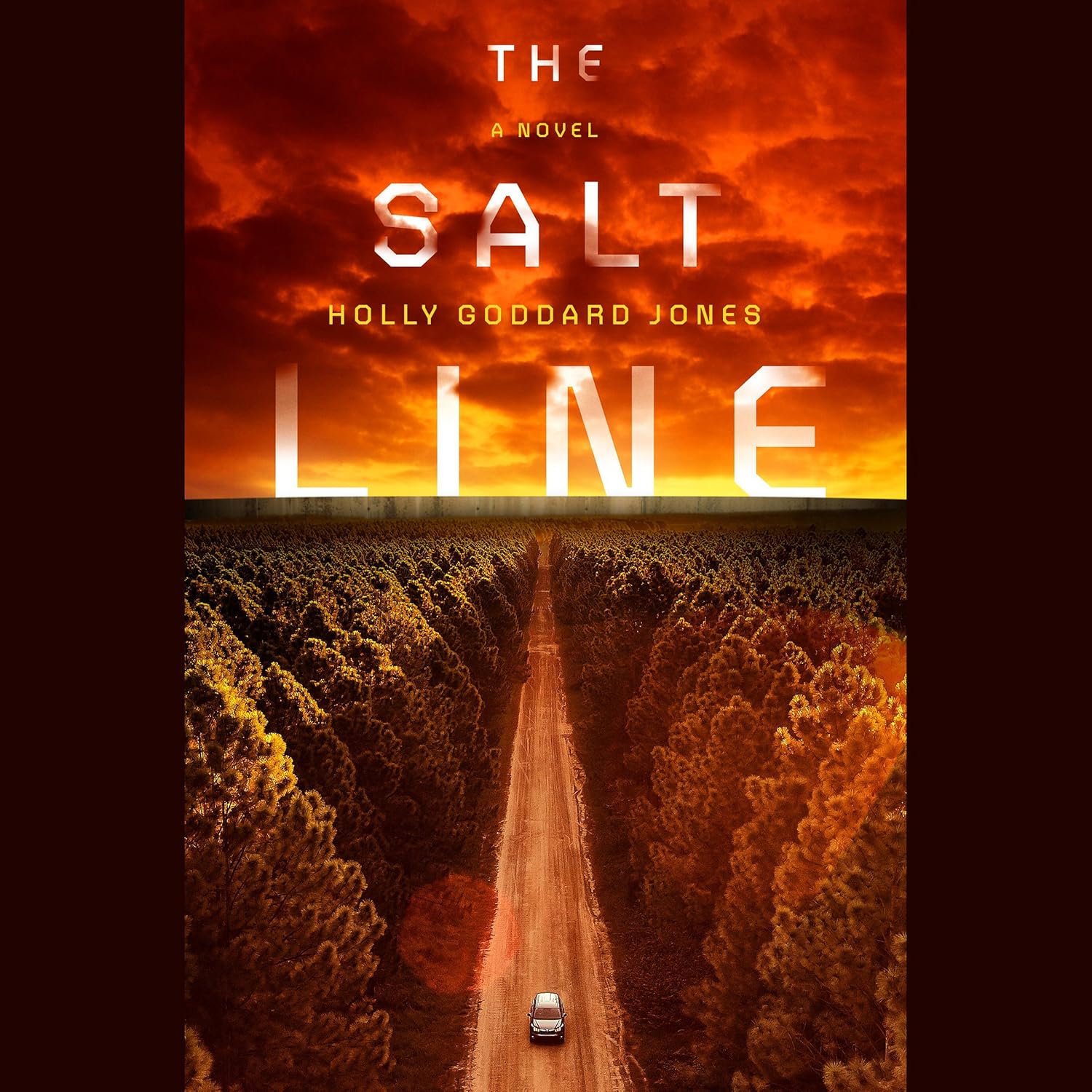
In a world increasingly beset by digital distraction and the ephemeral appeal of social media-driven trends, Lena Vargas’ ‘The Salt Line’ emerges as a salient beacon within the genre of speculative fiction. At its core, this novel not only anticipates potential societal collapse but also offers profound insights into themes of survival and the human condition. In order to thoroughly appraise the work’s significance and unravel its deeper intellectual fabric, one must examine its complex structures and how they align with and diverge from prevalent literary conventions.
Literary Context & Ecosystem

In the context of today’s literary environment, ‘The Salt Line’ holds an influential position, reflecting broader global publishing trends where speculative fiction is witnessing a revitalized interest. According to the Association of American Publishers, speculative fiction now intersects with various genres, creating a hybrid of narrative possibilities that appeal to a diverse reader demographic. The digital age has intensified competition, yet Vargas’ work stands out, not only due to its imaginative premise but also through its integration of ‘Healing Fiction’ elements and philosophical undertones that resonate particularly with a generation yearning for meaningful narratives. Data from Goodreads and Amazon suggest a growing trend towards literary works that offer more than mere escapism, fostering introspection and cultural dialogue.
Deep Dive: Substance & Craft

The allure of ‘The Salt Line’ can be attributed to Vargas’ adept use of narrative structure and storytelling techniques. The novel’s pacing is meticulously constructed, offering suspense interspersed with introspective pauses that engage readers on a cognitive level. Through her distinctive voice, Vargas crafts a multi-layered narrative that is as much about society’s resilience as it is about individual moral dilemmas. The novel’s intellectual depth is illustrated through its metaphorical frameworks that challenge traditional genre paradigms, merging original thematic concerns with time-honored literary traditions. Character development in the novel is profound, portraying intricate psychological landscapes that invite readers to explore the variegated facets of the human experience.
Common Misconceptions & Critical Fallacies

Despite its acclaim, ‘The Salt Line’ can be misinterpreted by casual readers vulnerable to surface-level readings or reliant on genre stereotypes. Such misconceptions often overlook the book’s sophisticated exploration of societal themes, reducing it to merely a post-apocalyptic narrative. Furthermore, in an age dominated by ‘Skim Reading,’ critical nuances may be lost, depriving readers of the opportunity to engage deeply with Vargas’ philosophical discourse. Understanding ‘The Salt Line’ requires a commitment to a more thoughtful and deliberate reading approach, one that respects the intricacies of Vargas’ narrative ambitions.
Expert Case Studies & Real-World Impact

The public reception of ‘The Salt Line’ has been overwhelmingly positive, yet it remains subject to academic scrutiny that often elevates its status beyond a bestseller into the domain of modern classics. The work’s profound influence is also observable in the emergence of subsequent authors who are inspired by its narrative ethos and thematic complexity. While its commercial success is evident in its estimated monthly sales, Vargas’ novel underscores a growing trend where literary value and mass appeal converge, challenging the traditional dichotomy between highbrow and popular literature.
2026 Industry Update

As of 2026, the reading landscape continues to evolve with the integration of Generative AI in literary creation and curation, presenting both opportunities and challenges for traditional narrative forms. ‘The Salt Line,’ with its rich narrative, remains relevant amidst the rise of ‘Social Reading’ platforms, demonstrating the enduring allure of a well-crafted story. Furthermore, the proliferation of immersive audiobooks and interactive formats underscores a shift in reader engagement, though Vargas’ work persistently appeals to those seeking depth over novelty. The ever-changing dynamics surrounding digital rights and privacy also continue to shape access and distribution, impacting readers’ ability to interact with literature.
Practical Reading Strategy

To maximize the insight drawn from ‘The Salt Line,’ readers are encouraged to adopt a ‘Deep Reading’ strategy, immersing themselves fully to internalize its complex themes. This approach encourages readers to go beyond surface interpretations, promoting a ‘Syntopical Reading’ habit—wherein Vargas’ work is contextualized alongside related speculative and philosophical narratives. Such a strategy enhances one’s ability to curate a meaningful personal library that balances intellectual exploration with enjoyment in the face of information overload.
Future Outlook (2–5 Years)

Looking ahead, the genre of speculative fiction, as exemplified by ‘The Salt Line,’ is poised for continuous transformation in the digital era. Predictive trends suggest an increasing interplay between authors and AI, influencing not just how stories are created but also how they are consumed. In this evolving ecosystem, critics are anticipated to play a pivotal role as ‘Trust Filters,’ ensuring that quality and authenticity remain central in the flow of literary discourse. Vargas’ work exemplifies how storytelling can coexist with technological innovation, offering a blueprint for future literary endeavors.
In conclusion, ‘The Salt Line’ by Lena Vargas exemplifies the profound potential of speculative fiction to inform and transform the reader’s understanding of society and survival. Its place within the literary landscape, the innovative craftsmanship, and its ability to resist superficial readings make it a significant work for both scholarly study and general readership. As readers navigate the continuous shifts of the literary terrain, Vargas’ novel remains a pivotal touchstone for those seeking to bridge the gap between philosophical inquiry and narrative storytelling. By engaging deeply with works such as ‘The Salt Line,’ readers enrich their intellectual and emotional literacy, contributing to personal and cultural growth in an ever-evolving fictional universe.
You can buy the book here:
👉 See price and buy now: https://amzn.to/4u3KrZs